
Switch to dark theme
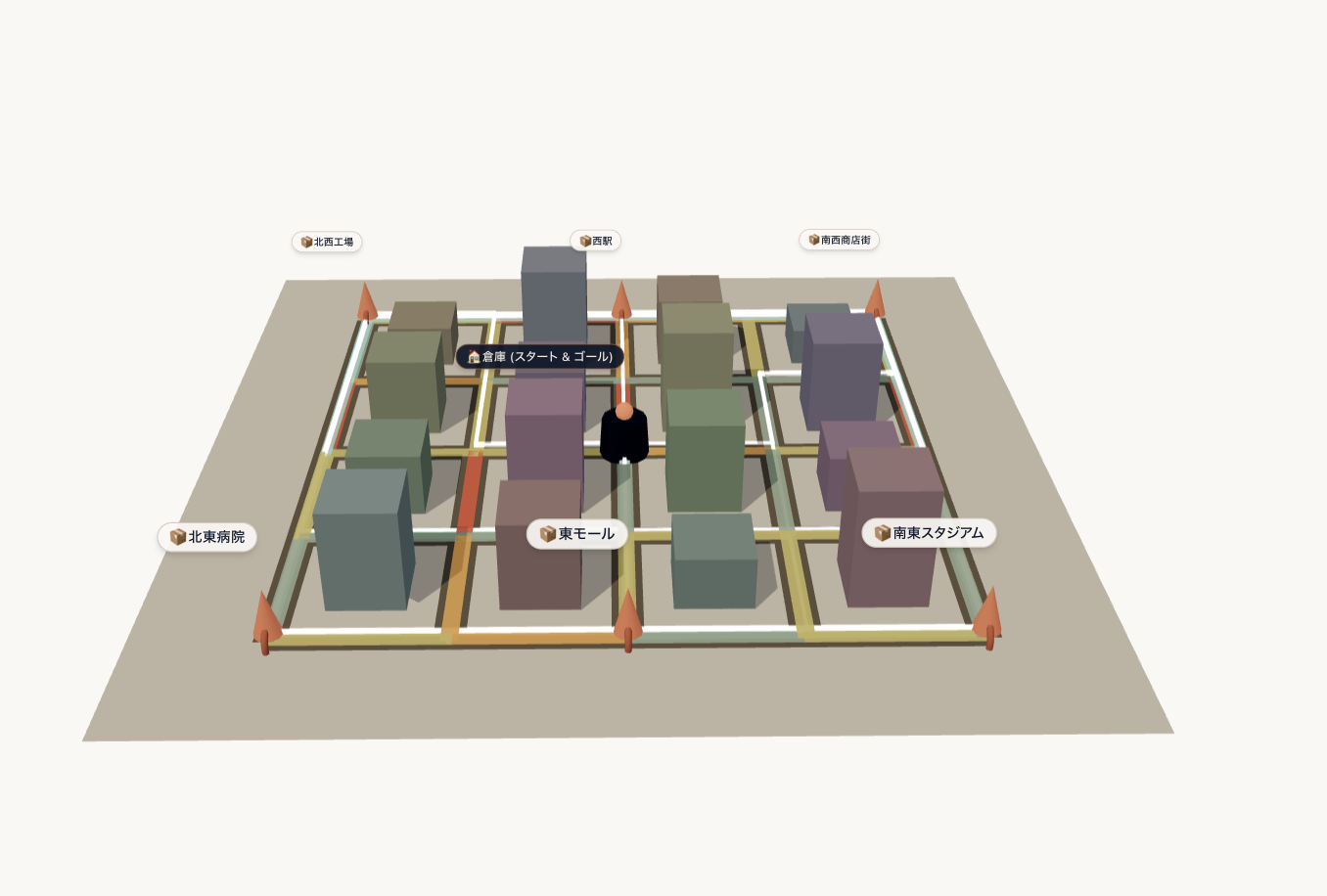
Design an optimization algorithm that minimizes total travel distance while delivering packages to multiple locations. Participants must determine the most efficient route that visits every customer exactly once and returns to the depot while satisfying operational constraints. This challenge simulates real-world logistics optimization problems faced by delivery companies, transportation providers, and supply chain operators.
Efficient delivery planning is a critical problem in logistics and transportation. As the number of delivery destinations increases, the number of possible routes grows exponentially, making brute-force search impractical. Companies must find high-quality routes quickly while balancing cost, travel distance, and operational efficiency. This challenge represents a simplified version of real-world route planning problems commonly addressed using classical optimization, AI, and quantum computing techniques.
Poor route planning leads to: ・Increased fuel consumption ・Higher operational costs ・Longer delivery times ・Reduced customer satisfaction ・Increased carbon emissions Even small improvements in route quality can generate significant cost savings when scaled across thousands of daily deliveries. Organizations are actively seeking advanced optimization methods capable of producing better solutions faster.
You are given: ・A depot location ・Multiple delivery destinations ・A distance matrix between locations Your task is to generate a route that: ・Starts from the depot ・Visits every delivery location exactly once ・Returns to the depot ・Minimizes total travel distance Participants must submit a valid route in the specified format.